
Ghana's cultural heritage stands among the most vibrant and expressive on the African continent. Within this rich cultural landscape, the art of masquerade and carnival has evolved as a powerful symbol of creativity, com...
Ghana's cultural heritage stands among the most vibrant and expressive on the African continent. Within this rich cultural landscape, the art of masquerade and carnival has evolved as a powerful symbol of creativity, community celebration, and cultural identity. Today, through the Black Star Carnival GH initiative, Ghana has an opportunity to transform this heritage into a globally recognized cultural and economic platform.
The Black Star Carnival GH is not simply a celebration of costumes, music, and street performance. It represents a national cultural movement that seeks to position Ghana within the global carnival economy while empowering communities, strengthening the creative industry, and promoting cultural tourism.
Dodzi Mensah Foli states that the future of carnival in Ghana lies in our ability to transform cultural heritage into structured cultural industries that create opportunities for communities while projecting Ghana onto the global stage.
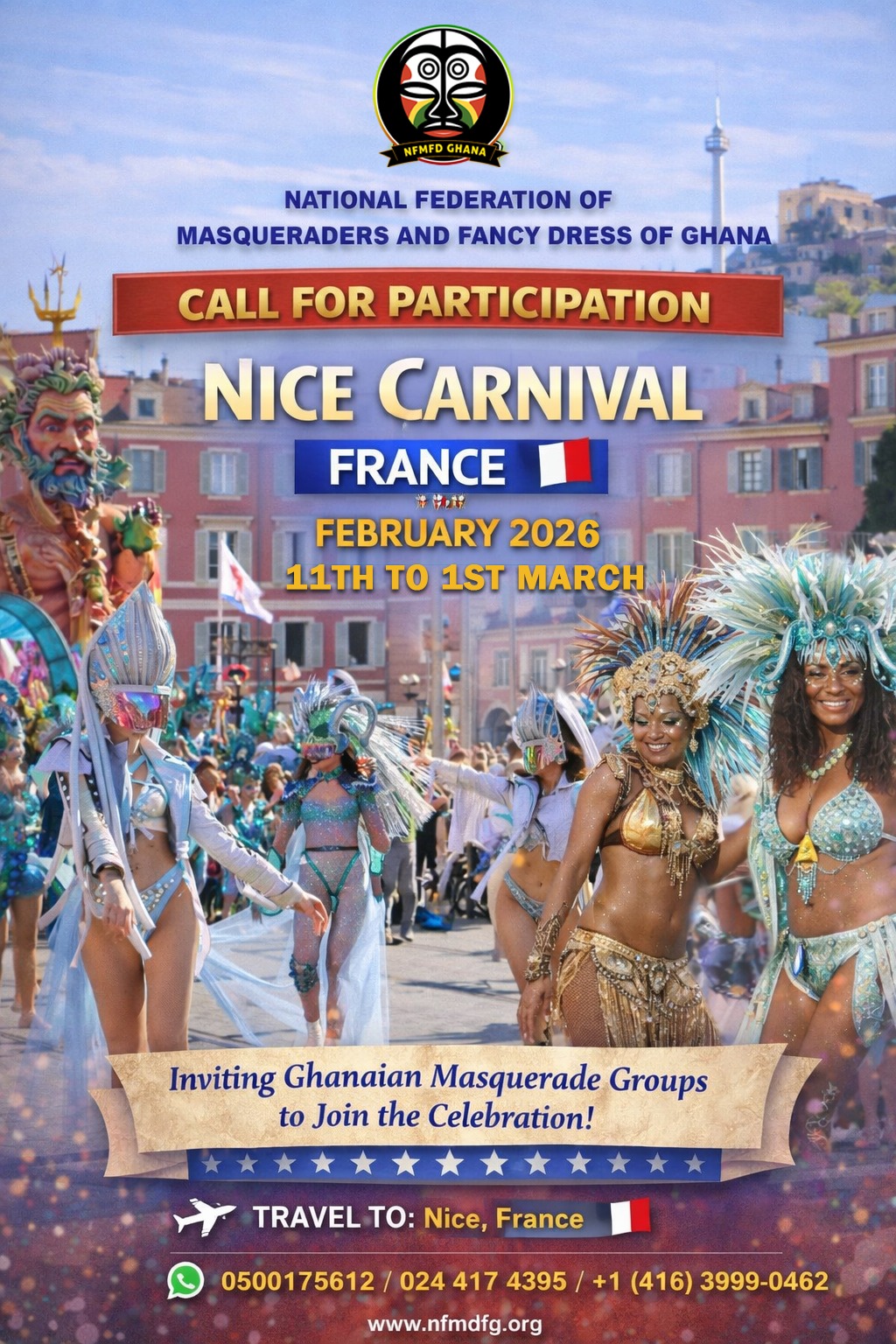
The National Federation of Masqueraders and Fancy Dress of Ghana therefore continues to champion the Black Star Carnival GH as a strategic cultural initiative capable of elevating Ghana's presence within the international carnival community.
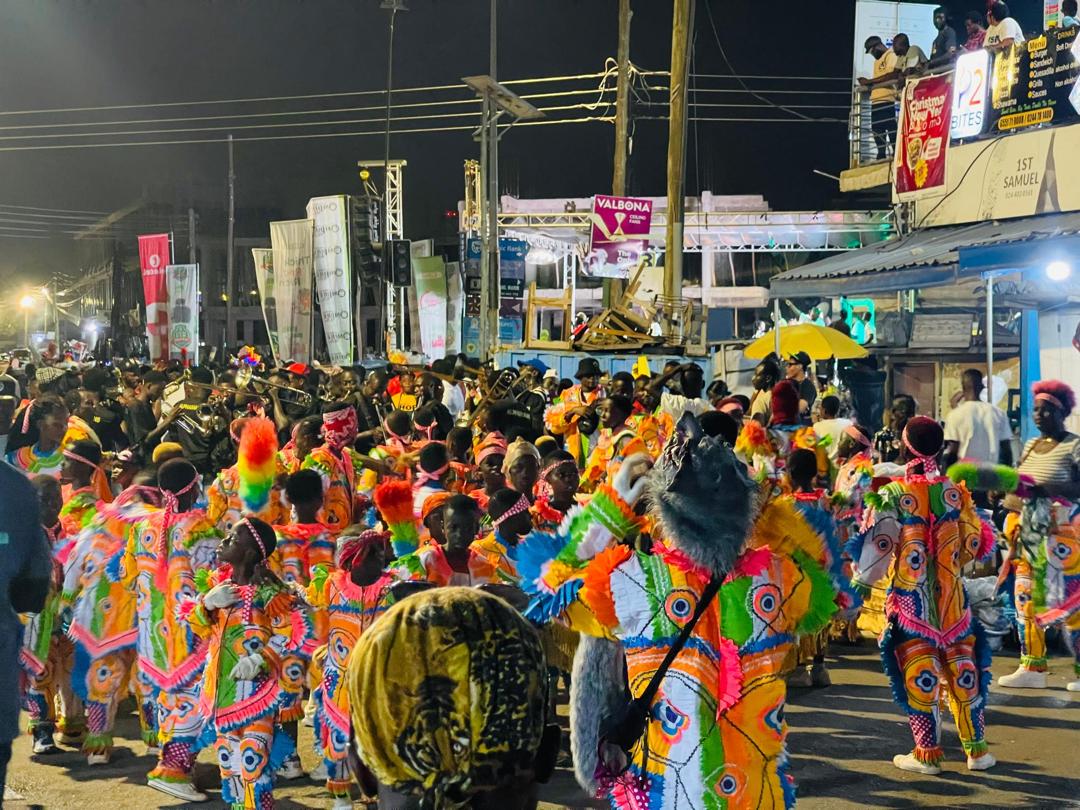
Masquerade culture in Ghana has developed over decades through vibrant community participation and artistic innovation. What began as localized cultural celebrations has gradually expanded across multiple regions of the country.
In the Western Region, masquerade traditions remain strong within coastal communities where elaborate costumes, rhythmic performances, and festive street processions continue to form part of cultural celebrations.
In the Central Region, towns such as Winneba, Saltpond, Apam, Cape Coast, Elmina, and Mankessim have sustained strong masquerade traditions for generations.
In the Greater Accra Region, the tradition has grown significantly, particularly within Tema, where masquerade groups continue to expand participation among the youth and the broader creative community.
The art form has also expanded beyond the coastal regions. Today masquerade and carnival culture can increasingly be seen in Kumasi, Obuasi, Sunyani, and Koforidua, reflecting the growing national interest in carnival arts and cultural performance.

Dodzi Mensah Foli emphasizes that this geographic expansion demonstrates that masquerade culture is gradually becoming a national cultural movement.
Around the world, carnival festivals have evolved into powerful cultural economies that generate enormous revenue for host countries and cities.
Examples include the Rio Carnival in Brazil, the Notting Hill Carnival in London, and the Trinidad and Tobago Carnival, which generate significant economic benefits through tourism, media, and creative industries.
Dodzi Mensah Foli states that Ghana possesses the cultural authenticity, artistic talent, and historical depth required to develop a carnival industry capable of contributing to national economic growth.
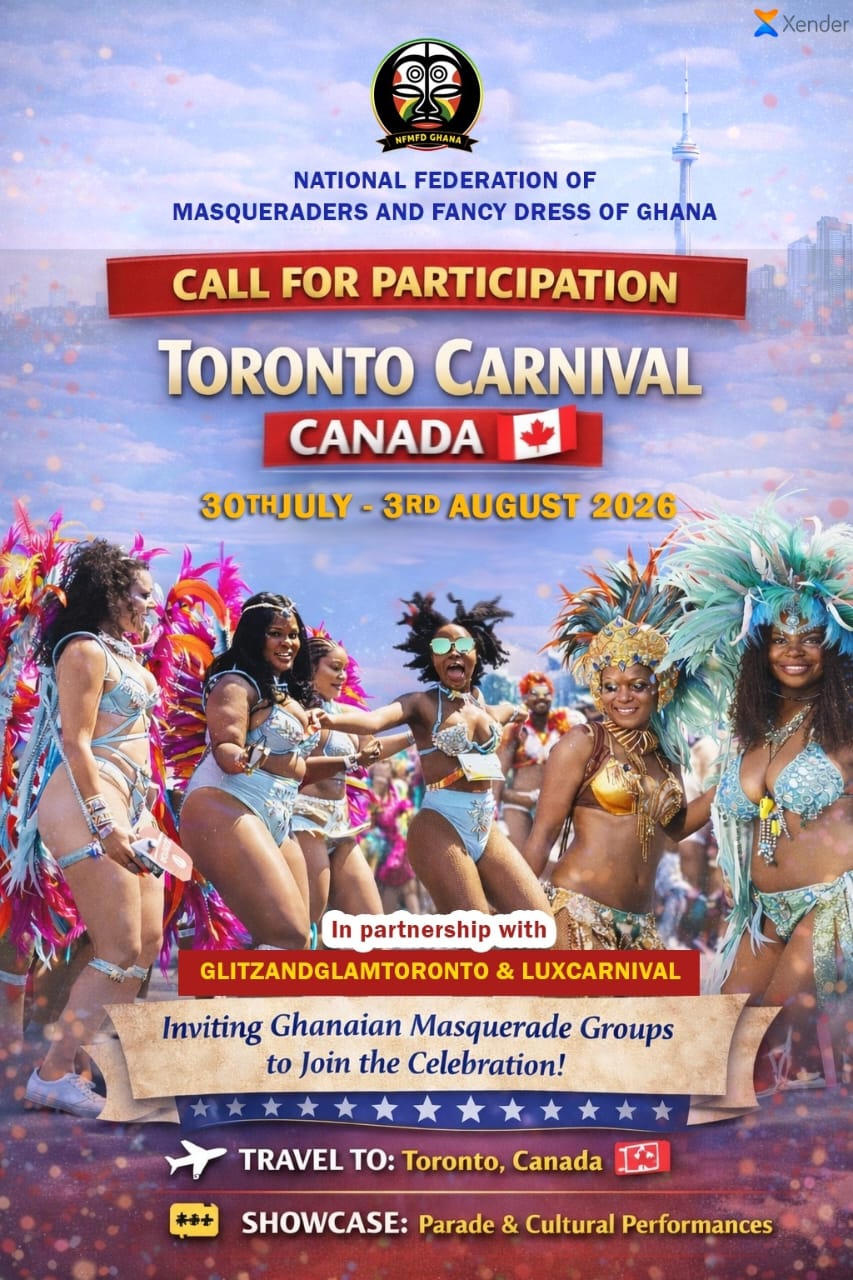
Through the Black Star Carnival GH initiative Ghana has the opportunity to develop a cultural tourism platform capable of attracting international visitors, diaspora communities, and global carnival enthusiasts.
The economic potential of carnival extends beyond tourism arrivals as it stimulates entire creative ecosystems including costume designers, musicians, dancers, choreographers, event producers, photographers, artisans, and cultural researchers.
Carnivals also serve as platforms for cultural diplomacy and international collaboration, strengthening connections between countries and diaspora communities.
Dodzi Mensah Foli concludes that the Black Star Carnival GH is more than a festival. It is a national cultural movement that will redefine how Ghana shares its cultural brilliance with the world while creating new opportunities for future generations.
5,542 views

897 views

733 views
566 views
537 views